
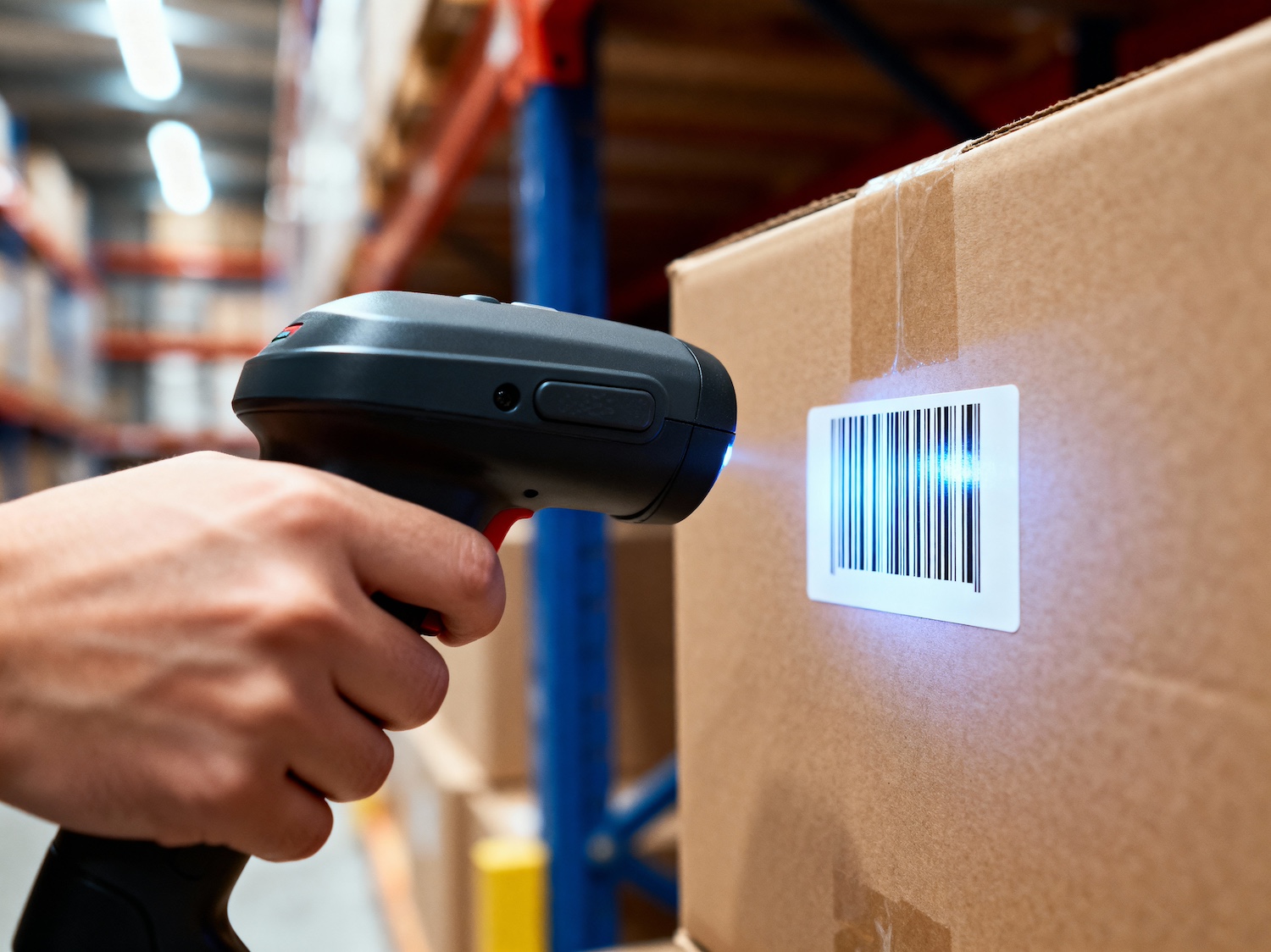
Selecting the right barcode scanner is a critical decision that directly impacts inventory accuracy, operational speed, and overall productivity. With a wide range of devices available on the market, businesses must look beyond price and basic functionality to determine which scanner best aligns with their operational requirements.
Barcode scanners are used across numerous industries, including manufacturing, warehousing, retail, healthcare, field service, and distribution. In each environment, scanning technology plays a vital role in tracking inventory movement, maintaining real-time visibility, reducing manual data entry, and supporting accurate reporting.
However, not all barcode scanners are built the same. A “good” barcode scanner is one that accurately captures information on the first scan, performs reliably under various conditions, integrates seamlessly with other software, supports the barcode types your business uses (1D, 2D, QR, etc.), and improves workflow efficiency rather than slowing it down.
In this guide, we’ll break down the key features, scanner categories, and buying considerations to help you make an informed, strategic investment.
Why You Need the Right Barcode Scanner
In modern warehouses and distribution centres, speed and precision are non-negotiable. The right barcode scanner ensures that every product movement is recorded accurately and in real time. This real-time synchronization strengthens warehouse accuracy and gives operations teams the visibility they need to make confident decisions.
Choosing the right scanner directly impacts several key areas of the business:
Reduced Errors
Manual entry introduces risk. A single mistyped SKU can lead to incorrect stock counts, shipping errors, billing discrepancies, or compliance issues. Barcode scanning significantly reduces human error.
Fewer errors mean:
- Improved order accuracy
- Fewer returns and reshipments
- Stronger customer satisfaction
- Cleaner, more reliable reporting
Over time, this accuracy protects margins and strengthens operational control.
Faster Checkout and Receiving
Speed matters, whether at a retail checkout counter or a busy warehouse dock. The right barcode scanner accelerates:
- Receiving and put-away processes
- Order picking and packing
- Point-of-sale transactions
- Cycle counts and audits
Faster scanning reduces bottlenecks and keeps inventory moving efficiently through the supply chain.
Improved Inventory Visibility
Accurate, real-time scanning feeds directly into inventory visibility, allowing teams to see:
- Current stock levels by location
- Inventory in transit
- Items allocated to orders
- Low-stock alerts and replenishment triggers
This level of visibility enables proactive decision-making, prevents stockouts, and reduces excess inventory. Instead of reacting to discrepancies after the fact, businesses gain the ability to manage inventory strategically.
What Makes a Barcode Scanner “Great”
1. Connectivity
When selecting a barcode scanner, connectivity should be a primary consideration. The way your scanner connects to devices, networks, and software systems directly affects how quickly and accurately data flows into your inventory management platform.
USB scanners connect directly to a workstation, POS terminal, or warehouse computer, and are particularly effective in receiving stations, packing tables, retail checkout counters, or any centralized workstation where mobility is not required. They offer simplicity and reliability, both of which are critical in high-volume environments where downtime or pairing issues can slow operations.
If your business operates in a warehouse, across multiple storage zones, or in the field, wireless connectivity becomes essential. Most wireless scanners connect through:
- WiFi – Ideal for real-time scanning within a warehouse or facility where network coverage is stable.
- Mobile Broadband (Cellular) – Designed for field service teams, delivery personnel, or remote job sites where WiFi access is limited.
- Bluetooth – Commonly used to pair scanners with tablets, mobile devices, or handheld computers for flexible workflows.
Wireless connectivity enables real-time synchronization with cloud-based inventory management systems. This means stock levels, order statuses, and inventory movements are updated instantly and visible to authorized users across the organization.
Keep in mind, connectivity goes beyond hardware. A barcode scanner should integrate seamlessly with inventory management systems, ERP platforms, warehouse management systems (WMS), accounting software, and point-of-sale (POS) systems. Strong integrations ensure scanned data flows directly into your operational workflows without manual re-entry.
2. Speed and Read Range
In high-volume environments, even fractions of a second per scan can significantly impact productivity, throughput, and labor efficiency.
Scan speed refers to how quickly a scanner can capture and process barcodes. In fast-paced settings such as warehouse receiving docks or manufacturing lines, delays create bottlenecks that ripple throughout operations.
A high-performance scanner with fast decode capabilities allows teams to:
- Process shipments more quickly during receiving
- Accelerate order picking and packing
- Complete cycle counts more efficiently
Read range refers to the amount of distance between the scanner and the barcode that still allows for accurate data capture. The required range depends heavily on your operating environment.
Extended-range scanners are better suited for pallet scanning, high shelving locations, and large distribution centers. In warehouses, long-range scanners allow employees to scan items on high shelves or across wide aisles without climbing ladders or repositioning inventory. This improves safety, reduces handling time, and speeds up workflows.
3. Screen
Not all barcode scanners have a display or touch screen. When deciding on a scanner it is important to determine if you need a screen and consider the complexity of what it can display. Screens can be helpful for your employees to receive transaction feedback. This notifies your employees whether or not there were any errors with the items they scan.
With a screen, scanners can have much more depth to their capabilities. For example, a Mobile Computer barcode scanner can push and pull info to and from your inventory system. Some of these can even act as both a cell phone and a barcode scanner.
Depending on your employees’ tasks, having a simple barcode scanner may be enough. A simple barcode scanner can be beneficial by only having one function that it performs very well. As a result, it requires very little training to use, reducing the risk of input errors.
4. Portability and Ideal Environment
The right barcode scanner for your business should match your working environment, durability requirements, and workflow design. A scanner that performs well at a checkout counter may fail quickly on a warehouse floor or out in the field.
In industrial and warehouse settings, barcode scanners are exposed to constant movement, repetitive handling, and the occasional drop. Choosing a highly durable device designed to handle drops and withstand harsh conditions can significantly reduce replacement costs and downtime. Barcode scanners with long battery life are also preferred.
Key durability factors to evaluate include:
- Drop test ratings (e.g., 4 ft., 6 ft., or higher to concrete)
- IP ratings for dust and water resistance (e.g., IP54, IP65, IP67)
- Operating temperature ranges for hot, cold, or outdoor environments
- Shock and vibration resistance for industrial use
For field teams operating outdoors or in uncontrolled environments, water resistance and temperature tolerance are essential.
The physical design, or form factor, of a barcode scanner is another factor to consider as it directly affects user comfort, speed, and productivity.
Common form factors include:
- Pistol grip scanners: Ideal for warehouse picking, high-volume scanning, and long shifts. They are ergonomic and comfortable for repetitive scanning tasks.
- Pocket or handheld scanners: Compact and lightweight, suitable for retail environments or lower-volume scanning needs.
- Wearable scanners (ring or glove-mounted): Designed for hands-free operations, improving efficiency in high-speed picking environments.
5. Scanning Technology
Are you scanning 1D or 2D barcodes? 1D barcode scanners are linear and represent data with parallel black bars and numbers. The most common type is the Universal Product Code (UPC) barcode, which is found on most product packaging.
On the other hand, 2D barcodes have vertical and horizontal data. A common example is a QR code, which has become popular in marketing and social media. The main difference between these two barcodes is the amount of data they can contain. A 1D barcode can only contain 20-25 characters, while a 2D barcode can contain up to 2,000 characters. 2D barcode scanners can read both 1D and 2D barcodes, making them versatile for a wide range of uses.
6. GPS
A barcode scanner with GPS capabilities is useful if you have items moving to various storage locations. As you scan, the GPS will pinpoint the item location and record the closest storage location to that item. For example, as you scan industrial equipment into a warehouse, the scanner will detect the location and enter that into your inventory system. This ensures that you know exactly where your items are. GPS location scanning is a great option for expensive or shared equipment.
Best Barcode Scanners by Category
When searching for the best barcode scanner for your business, the key is alignment. Understanding the different scanner types is essential for choosing the best scanner that matches your specific business needs.
Best Barcode Scanners for Field Service
Typical Use Case: Field technicians, maintenance teams, healthcare providers, and delivery personnel who scan equipment or inventory outside a centralized facility.
Key Strengths:
- Lightweight and portable design
- Designed for continuous use, with a long battery life that supports extended shifts in field service applications
- Bluetooth or mobile broadband connectivity
- Durable construction for travel and outdoor environments
What to Look For:
- Strong IP rating for dust and water resistance
- Drop-test rating of at least 5–6 feet
- Reliable pairing with smartphones or tablets
- Seamless integration with mobile inventory management software
Best Barcode Scanners for Warehouse & Distribution
Typical Use Case:
Receiving, pallet scanning, order picking, packing, cycle counting, and shipping in warehouse and distribution center environments.
Key Strengths:
- Fast read speed for high-volume workflows
- Extended read range for racking and bulk storage
- Ergonomic pistol-grip design
- WiFi connectivity for real-time data transmission
What to Look For:
- Long-range scanning capability (especially for high shelving)
- High drop-test rating (6+ feet to concrete)
- Comfortable grip for repetitive use
- Compatibility with WMS, ERP, and inventory systems
Best Budget Scanners
Typical Use Case:
Retail checkout counters, small warehouses, light-duty scanning, or businesses beginning to digitize inventory processes.
Key Strengths:
- Affordable price point
- Plug-and-play USB setup
- Simple operation with minimal configuration
What to Look For:
- Reliable first-pass read accuracy
- Support for required barcode types (1D or 2D)
- Compatibility with POS or inventory software
- Adequate durability for your environment
Best Rugged Scanner
Typical Use Case:
Industrial manufacturing, cold storage, construction sites, large distribution centers, and harsh operating environments.
Key Strengths:
- Industrial-grade housing
- High drop-test ratings (often 8+ feet)
- Advanced IP ratings (IP65 or IP67)
- Wide operating temperature ranges
What to Look For:
- Proven durability certifications
- Resistance to dust, moisture, and vibration
- Long battery life for extended shifts
- Ergonomic design that supports gloved use
Best Barcode Scanners for Mobile Devices
Typical Use Case:
Organizations using smartphones or tablets as part of a mobile inventory management workflow.
Key Strengths:
- Bluetooth connectivity
- Compact and lightweight design
- Easy pairing with iOS and Android devices
- Flexible mobility across locations
What to Look For:
- Stable and secure Bluetooth connection
- Long battery performance
- Compatibility with your cloud-based inventory software
- Comfortable form factor for extended scanning sessions
How to Choose the Best Barcode Scanner
Evaluating your specific needs—including required features like connectivity, durability, and accuracy—ensures you select a barcode scanner that truly fits your business.
Below is a practical buyer checklist, with important questions to ask in order to guide your final decision.
Step 1: Define Your Operational Requirements
- Where will the scanner be used (warehouse, retail, field, manufacturing)?
- How many scans are performed per day?
- What barcode types do you need to read (1D, 2D, QR, damaged labels)?
- Do you require real-time data transmission?
- Will employees scan at close range, long range, or both?
- Are there environmental challenges (dust, moisture, extreme temperatures)?
- Should you choose a traditional barcode scanner or a smartphone/tablet + bluetooth scanner?
Step 2: Align Scanner Specifications with Your Workflow
- High-volume warehouse picking? Prioritize scan speed, extended range, and ergonomic pistol grip design.
- Field service operations? Focus on portability, Bluetooth/mobile connectivity, and durability.
- Retail checkout? Emphasize fast first-pass reads and compact form factors.
- Industrial environments? Choose rugged devices with strong drop-test and IP ratings.
Step 3: Budget Strategically
In addition to the actual purchase price, budget considerations should include:
- Total cost of ownership (TCO)
- Replacement frequency due to durability limits
- Downtime costs from device failure
- Productivity gains from faster scanning
- Software integration costs
Step 4: Plan for Scalability and Future Growth
- Will scanning volume increase as operations grow?
- Are you expanding to multiple locations?
- Will you adopt advanced inventory features like real-time replenishment or VMI?
- Can the scanner support future software updates and integrations?
Avoid Common Buying Mistakes
We’ve compiled a list of preventable errors to keep in mind when selecting barcode scanners. Common mistakes include:
- Choosing based solely on price
- Ignoring durability ratings
- Overlooking connectivity requirements
- Failing to confirm software compatibility
- Buying for current needs only (without growth planning)
- Not considering employee ergonomics
Learn How Inventory Visibility Improves Scanning Workflows