
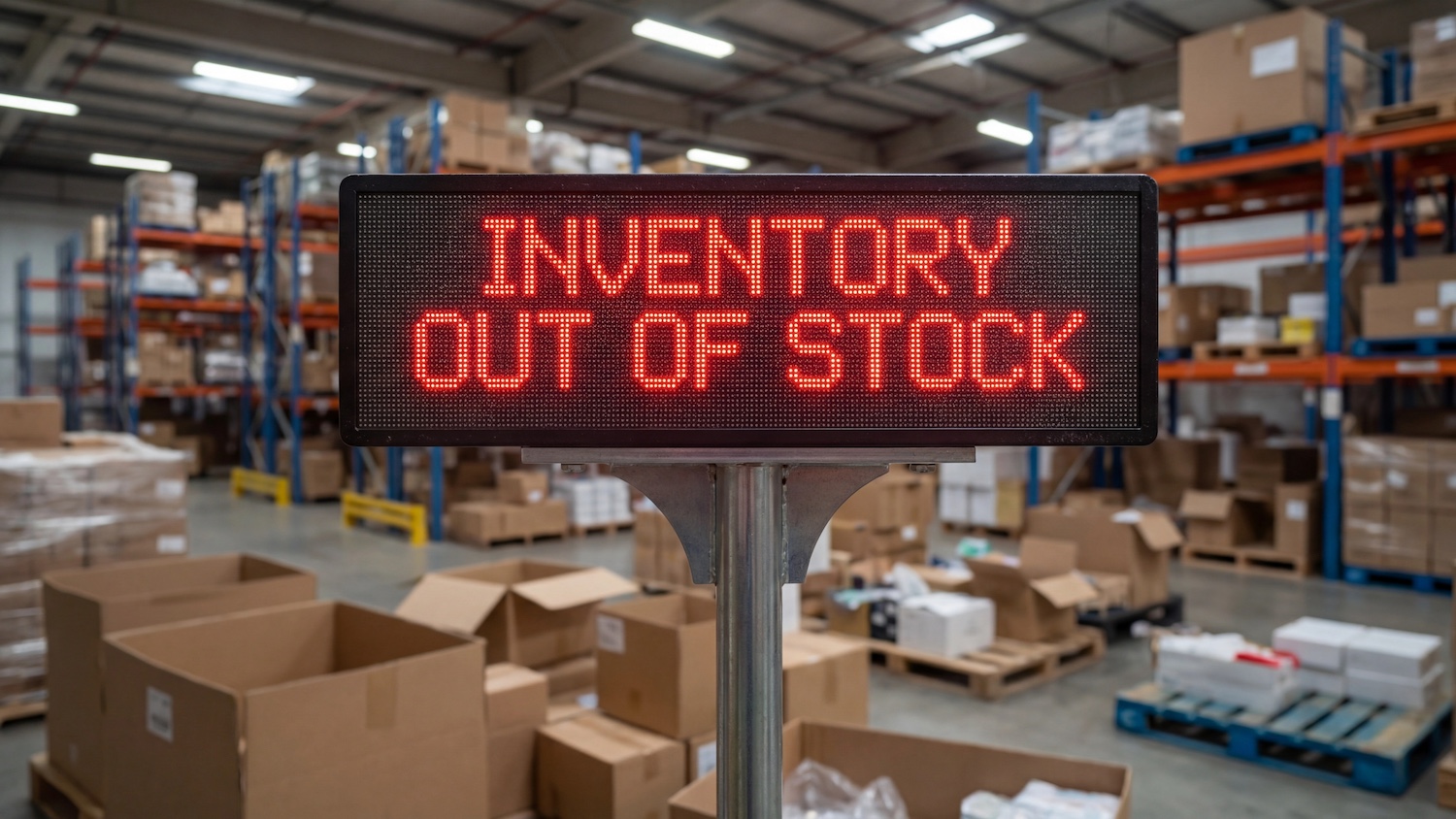
Inventory replenishment is the process of restocking products or materials to maintain optimal inventory levels and meet ongoing customer demand. While the concept is simple, replenishment is one of the foundational processes in inventory management, directly influencing product availability, operational efficiency, and financial performance.
When replenishment is managed effectively, businesses can keep shelves stocked with the right products at the right time while avoiding excess inventory. But when replenishment processes break down, the consequences can quickly ripple across the supply chain. Poor replenishment planning can lead to stockouts that frustrate customers and disrupt service levels, or overstock situations that tie up working capital and increase carrying costs. Inaccurate restocking decisions also create cash flow pressure, forcing businesses to invest in inventory that may sit idle for months.
Modern supply chains must balance demand variability, supplier lead times, and inventory costs, making replenishment a data-driven discipline rather than a simple reorder decision. Many organizations use advanced algorithms and predictive analytics to improve replenishment accuracy and efficiency. Replenishment requires organizations to estimate future demand for products or materials based on historical sales data, seasonal trends, and current orders.
In this guide, we’ll explore the fundamentals of replenishment, including what inventory replenishment is, how the process works, and the different types of replenishment strategies organizations use today. We’ll also examine the difference between replenishment and fulfillment, and how modern inventory management software helps automate replenishment decisions, improve accuracy, and reduce costly stockouts or overstock.
What is Replenishment in Inventory Management?
Inventory replenishment is the proactive process of restocking products before inventory levels become too low, ensuring the right stock is available at the right time to meet customer demand. Rather than reacting to stockouts after they occur, replenishment uses demand patterns, lead times, and inventory thresholds to trigger timely restocking decisions.
For example, if a business initially orders 100 t-shirts and sales begin to reduce available stock, the system or purchasing team will replenish inventory by reordering additional units before supply runs out. Order placement is a critical step in the replenishment process, involving the timing and strategy of placing purchase orders to meet future demand and manage inventory levels effectively. This ensures continuity of supply without disrupting operations or customer orders.
Replenishment can involve ordering products from suppliers or transferring inventory between warehouses, distribution centers, or retail locations. When managed effectively, it keeps inventory flowing smoothly through the supply chain, preventing shortages while avoiding excess stock that ties up cash and storage space.
Why Replenishment is So Important
Replenishment should occur when products reach their reorder point, ensuring new stock arrives before existing inventory runs out. In advanced inventory management systems, reorder points are automatically calculated using key parameters such as minimum and maximum stock levels, lead times, demand patterns, and safety stock. This allows organizations to restock proactively rather than reacting after shortages occur.
At its core, replenishment exists to keep inventory flowing smoothly through the supply chain while maintaining the right balance between availability and cost. When managed effectively, it delivers several important operational and financial benefits:
- Prevent Stockouts: Maintaining proper reorder points protects customer service levels, improves fill rates, and reduces lost sales caused by unavailable products.
- Maintain Optimal Inventory Levels: Replenishment helps businesses carry enough stock to meet demand without accumulating excess inventory.
- Balance Supply and Demand: By aligning purchasing decisions with actual consumption patterns, replenishment stabilizes operations and reduces volatility.
- Reduce Carrying Costs: Avoiding excess stock lowers storage expenses, warehouse congestion, insurance costs, and the risk of obsolete inventory.
- Improve Cash Flow: Capital is not unnecessarily tied up in inventory, allowing businesses to allocate resources more strategically.
- Better Forecast Accuracy: Over time, replenishment systems refine demand signals and purchasing patterns, enabling more data-driven decision-making.
How Replenishment Works
Inventory replenishment follows a structured process designed to keep stock levels balanced while ensuring products are available when needed. While the exact workflow may vary between organizations, we’ve broken down 5 key steps most replenishment processes tend to follow.
1. Monitor Inventory Levels
The process begins with 24/7, complete inventory visibility across warehouses, distribution centers, or customer locations. Accurate, real-time inventory data is essential here–without it, businesses risk making replenishment decisions based on outdated information.
2. Identify Reorder Points
When inventory levels fall to a predefined reorder point, it signals that replenishment should begin. Reorder points are typically calculated using demand forecasts, supplier lead times, and safety stock, which acts as a buffer against unexpected demand spikes or supplier delays.
3. Trigger Purchase Orders or Stock Transfers
Once the reorder point is reached, the system automatically initiates a purchase order from a supplier or transfers stock from another warehouse or location.
4. Account for Lead Time
Lead time–the time it takes for new stock to arrive–must be factored into replenishment decisions. Ordering early enough ensures inventory arrives before stock levels fall too low.
5. Receive and Restock Inventory
Finally, the incoming inventory is received, verified, and restocked into available inventory. Updated stock data then feeds back into the system, allowing the replenishment cycle to continue.
When supported by accurate data and safety stock planning, this process keeps inventory levels stable while minimizing stockouts and excess inventory.
Types of Replenishment Strategies
Not all organizations replenish inventory the same way. The best replenishment strategy depends on factors such as sales volume, demand variability, supplier lead times, and operational complexity. Some businesses need highly responsive, real-time replenishment processes, while others prefer simpler scheduled approaches. Understanding the different replenishment models helps organizations select the method that best aligns with their operations and customer demand.
Continuous Replenishment
Continuous replenishment relies on real-time inventory monitoring to trigger a new purchase order or stock transfer automatically when stock reaches a predefined threshold.
This strategy is ideal for organizations managing high-volume or fast-moving SKUs, where demand is relatively predictable and stockouts must be avoided. Retailers, distributors, and e-Commerce operations often use continuous replenishment to maintain consistent product availability while minimizing manual oversight.
Periodic Replenishment
Periodic replenishment uses scheduled inventory review cycles, such as weekly or monthly checks, during which inventory levels are assessed and orders are placed as needed.
This method is simpler than continuous monitoring and works well for organizations with stable demand or lower transaction volumes. However, because orders are only placed at set intervals, it can be less responsive to sudden demand spikes or supply disruptions.
Demand-Based Replenishment
Demand-based replenishment adjusts restocking decisions based on actual sales patterns and demand forecasts. Rather than relying solely on fixed thresholds or schedules, this approach dynamically adapts to changing demand.
This strategy is particularly valuable in seasonal industries or markets with fluctuating demand, where businesses must quickly respond to shifts in purchasing behavior.
Min/Max Replenishment
Min/Max replenishment is a straightforward method widely used in warehouse and distribution environments where predictable inventory ranges are required for operational efficiency.
Inventory is monitored against two thresholds to prevent both stockouts and overstocking:
- Minimum level: When stock reaches this point, replenishment is triggered.
- Maximum level: Inventory is restocked up to this predefined level.
Key Components of an Effective Replenishment System
An effective replenishment system depends on accurate inventory data and disciplined operational processes. Without reliable stock counts, lead time tracking, and consistent purchasing rules, replenishment decisions quickly become reactive, increasing the risk of stockouts or excess inventory.
Successful replenishment programs rely on several key components working together:
- Reorder Point Calculation: Determining when to reorder inventory based on demand rates, supplier lead times, and safety stock buffers. Accurate formulas must also account for demand variability to prevent shortages.
- Lead Time Management: Monitoring supplier reliability and shipping timelines to ensure replenishment orders arrive when expected. Delays or inconsistent lead times can disrupt even well-planned reorder strategies.
- Safety Stock Strategy: Maintaining buffer inventory to protect against demand spikes or supplier disruptions while avoiding excessive stock that increases carrying costs.
- Inventory Visibility: Real-time tracking across warehouses and locations, ensuring SKU-level accuracy and enabling faster, more informed replenishment decisions.
Replenishment vs. Fulfillment: What’s the Difference?
Fulfillment is what takes a product from the supplier to their customer. This includes receiving, storing, picking, packing, and shipping products to customers after an order is placed. Although replenishment and fulfillment are closely connected, they serve different purposes within the supply chain: replenishment focuses on maintaining the right inventory levels, while fulfillment focuses on delivering orders to customers quickly and accurately.
These processes require different performance metrics and operational priorities. Replenishment is measured by KPIs such as inventory turnover, stockout rate, and reorder accuracy, while fulfillment focuses on order accuracy, shipping speed, and on-time delivery.
They also rely on different system capabilities. Replenishment functions prioritize forecasting, inventory visibility, and automated reordering, while fulfillment emphasizes order processing, picking, packing, and shipping efficiency. Understanding this distinction helps organizations optimize both inventory planning and customer service performance.
How Inventory Management Software Improves Replenishment
Manual replenishment processes are often reactive. Teams rely on spreadsheets, periodic checks, or manual purchasing decisions to determine when to reorder stock. This approach increases the risk of missed reorder points, delayed purchasing, and inaccurate stock levels, all of which can lead to stockouts or excess inventory.
Inventory management software replaces these reactive processes with automated, data-driven replenishment decisions. By using real-time inventory data, businesses can restock proactively and maintain consistent inventory levels across their supply chain.
Modern systems improve replenishment in several key ways:
- Automated Reorder Triggers: Systems monitor inventory levels continuously and automatically trigger replenishment when predefined thresholds are reached. Customizable reorder rules and system-generated purchase orders reduce human error and ensure timely restocking.
- Real-Time Inventory Visibility: Multi-location dashboards provide up-to-date stock levels across warehouses, distribution centers, and retail locations. Instant inventory updates allow businesses to make replenishment decisions based on accurate data.
- Demand Forecasting Tools: Built-in forecasting capabilities analyze historical sales patterns and identify trends, helping businesses predict demand more accurately and reduce guesswork in purchasing decisions.
How Clear Spider Supports Smarter Replenishment
Clear Spider helps organizations manage replenishment more efficiently by providing real-time visibility and automated inventory controls across the supply chain. Because the platform is cloud-based, inventory data is updated instantly across warehouses, distribution centers, and sales channels, ensuring replenishment decisions are always based on accurate information.
Key capabilities that support smarter replenishment include:
- Cloud-Based Real-Time Tracking: Live inventory updates across all locations.
- Automated Min/Max Replenishment: Automatic restocking when inventory reaches predefined thresholds.
- Multi-Location Inventory Control: Visibility and coordination across warehouses and facilities.
- Purchase Order Management: Streamlined supplier ordering and tracking.
- Barcode Integration: Faster, more accurate inventory updates through automated scanning.
Together, these tools help businesses reduce stockouts, avoid excess inventory, and maintain consistent product availability.Ready to eliminate stockouts and overstock? Check out Clear Spider’s Fulfillment and Replenishment Inventory Management to automate replenishment, improve visibility, and give you full control over inventory across every location.