
• Skip to primary navigation
  • Skip to main content
  • Skip to primary sidebar
Clear Spider Logo

Clear Spider

Powerful Inventory Management Made Simple

  • Product
    • Solutions
      • Vendor Managed Inventory
      • Warehouse Management System (WMS)
      • Inventory Management and Control
      • Order and Shipping Management
      • Field Service Inventory Management
      • Mobile Inventory Management
      • SNAP2 Reorder Touchless Tech
      • Clear Spider Kiosk
    • Features
      • Barcode Scanning Software
      • Fulfillment and Replenishment
      • Lot Control and Shelf Life
      • Kitting and Light Manufacturing
      • Serialized Inventory
      • Return Material Authorization
      • Invoice and Billing
      • Reports and Analytics
      • Consignment Inventory
      • Automated Industrial Vending
    • Benefits
      • Cloud-Based Inventory Management
      • Customizable Software
      • Intuitive Design
      • Safe and Secure
      • Quick Implementation
      • High ROI
    • Our Technology
  • Integrations
    • Accounting
    • Customer Relationship Management (CRM)
    • Enterprise Resource Planning (ERP)
    • Point of Sale (POS)
    • E-Commerce
    • Shipping
    • Seamless Integration
  • Industries
    • Industrial and Manufacturing
    • Aerospace and Automotive
    • Government, Education, and Healthcare
    • Research, Energy, and Environment
    • Transportation, Warehousing, and Logistics
    • Technology and Telecommunications
    • Print and Publishing
    • Retail, Entertainment, and Food Services
    • Construction, Maintenance, and HVAC
    • Finance and Banking
    • All Industries
  • Pricing
  • Resources
    • ROI Calculator
    • Case Studies
    • Whitepapers
    • Blog
    • Infographics
    • Glossary
    • FAQ

What Not To Do

Denver Airport Luggage Management Disaster

March 4, 2020

Construction began on the Denver International Airport (DIA) in 1989. The airport promised a highly skilled baggage system that automates the process of moving luggage. It was projected to be the most advanced systems of its kind in the world. The underground, computer-driven system would solve many logistics problems within the entire airport. However, when the airport officially opened in 1995, the DIA faced luggage management disaster.

What Went Wrong?

The management team on the project severely underestimated the complexity of developing the baggage system. Despite advice from experts, the project was driven forward and failed to meet schedules, budgets, and system requirements. 

Luggage Management Disaster

To understand the final disaster outcome of  the DIA baggage project, the numerous failures throughout the project must be explained. 

  1. Failure to Integrate Strategies: By 1991, 3 years after the start of the project, the management team realized no one was building an integration system for the baggage system. Poor communication  and mismanagement of the teams led to the integration being started halfway through the project. 
  2. Design Issues: The design of building started before the baggage system so designers had to accommodate quick turns and other features of the buildings structure. This created more complications slowing the project down even more. 
  3. Maintaining the Project Deadline: The complex system was more than management teams had initially predicted. The rising barriers forced engineers to work 16 months after the airport was finished being built to get the baggage system to work. 
  4. Demonstration and Opening Failures: The first system demonstration was a disaster and the airport’s opening dates kept being delayed due to the incomplete baggage system. 

Results

The continued delays of the project cost the airport an additional $560 million USD. The project was completed, but only delivered on a fraction of its promises. The system was only capable of supporting baggage on outbound flights in a single concourse.  It was initially planned to be capable of connecting 3 concourses. The issues surrounding the system created terrible publicity for the new airport. 

Lessons Learned

Had there been communication between all teams on the baggage systems project, the DIA may have been able to open on time with its fully advanced one of a kind system. Instead, teams were disorganized, failed to meet deadlines and the system created disaster for the DIA. 

When beginning a large scale project, ensure effective logistics planning takes place. Talk to experts about system requirements and ensure constant communication between all teams. 

Want to learn more about Inventory Management Solutions? See How Clear Spider Can Help. Schedule a Demo today!

What Not To Do

FoxMeyer’s Downfall: A Logistics Management Disaster

February 5, 2020

FoxMeyer was one of the top drug wholesaler-distributors in the United States in 1995. The company specialized in distributing pharmaceuticals at the national market share level. In 1996, FoxMeyer faced life or death as the Delta III project crippled their company leaving a logistics management disaster in their wake. 

The Plan

FoxMeyer’s plan began with the Delta III project in 1993. The company needed software that was capable of taking care of high volume transactions and complex pricing models. For this reason, they chose to implement an ERP system (SAP R/3) and an automated warehouse system (Pinnacle).  

FoxMeyer planned to invest $65 million over 18 months to implement the system. The system projected annual savings of $40 million. However, management failures and unreasonable deadlines branded this project as FoxMeyer’s downfall and a complete logistics management disaster. 

FoxMeyer Logistics Management Disaster

What went wrong:

  1. Poor Software Decisions: The SAP R/3 system was designed for manufacturing companies, not wholesalers like FoxMeyer. The system was missing key elements that wholesalers need like the ability to handle mass orders. FoxMeyers filled orders from thousands of pharmacies, totalling over 500,000 orders per day that the SAP R/3 couldn’t handle. 
  2. Lack of Consultation: FoxMeyer ignored expert’s advice on the requirements needed in a system for their scale of business. They decided on a system measured by reputation and not on their specific needs. 
  3. Rushed Implementation: Anderson Consulting was hired to implement the systems, but failed to do their job. Implementation pushed its schedule forward to meet customer needs but failed to ensure all system requirements were met. This meant parts of the system were not tested properly and glitches or bugs were not taken care of. 
  4. Poor Management Team: The management team on the Delta III project failed to maintain their support on the project through the implementation stages. During the time of implementation, management did not acknowledge system problems, ignoring the risks associated with the new technology. 
  5. Failed User Engagement: The workers at the FoxMeyer warehouses were not supportive of the system implementation as they feared the automotive system would cause layoffs. Employee morale plummeted as the company’s management failed to involve employees in conversation. The lack of communication caused disgruntled employees to damage inventory and fail to fill orders correctly in protest. 

Results

FoxMeyer’s CEO resigned due to project delays. The company lost $34 million worth of inventory due to system failures and employee lash back. 

FoxMeyer went bankrupt in 1996 as a result of the ERP system project implementation failure. In 1998, FoxMeyer launched a lawsuit suing SAP and Anderson Consulting for their hand in the company’s downfall.   

Lessons Learned 

When implementing a new project, the project’s management team must be experienced with a high level of technical expertise. The project must have a contingency plan to avoid the impact of failure. Lastly, all parties should have a voice in the project. Failing to include the advice of professionals and concern of employees ended up costing FoxMeyer their company. 


Want to learn more about Inventory Management Solutions? See How Clear Spider Can Help. Schedule a Demo today!

What Not To Do

Cisco’s Fall From Technology to Inventory Disaster

January 8, 2020

Cisco is a networking and IT company based in the center of California’s Silicon Valley. They specialize in manufacturing and selling technological equipment for telecommunications, networking and many other technological services. In 2001, Cisco went from a leader in technology to inventory disaster. 

Cisco Rises With Technology

The 1990s was a tipping point for technology as new technologies emerged. Businesses struggled to grow alongside quick-changing technological advancements. For instance, in the early 2000s, Cisco was on track to become the world’s first trillion-dollar company. Their annual growth was projected to be between 30 to 40 per cent! 

From Technology to Inventory Disaster

Throughout the 1990’s Cisco was thriving with its virtual supply chain. The company’s process was highly reliable and had high customer satisfaction. Additionally, Cisco implemented global virtual manufacturing. This means Cisco had manufacturing plants around the world working with contract equipment manufacturers, allowing them to create a simpler business process. 

Filled with success, Cisco was responding to high volume patterns of orders and accumulating a substantial amount of inventory. But by 2001, Cisco began to face barriers in their supply chain. Failures in their technology slowed a path in the chain. 

Technological issues were not a problem for Cisco as they continued to push out product. This became their biggest mistake. The telecommunications industry faced a downturn and Cisco didn’t adjust its supply chain accordingly. Instead, they ignored the slowing demand and continued to produce high levels of product. 

Cisco had a surplus of inventory and their once glowing management process fell short. 

Results

The surplus of inventory was detrimental to Cisco. As a result, Cisco had to take a $2.2 billion write-down. Furthermore, the public criticized them for their practices. They also lost half of their stock value.

Lessons Learned

Cisco outsourced their manufacturing and because of their inability to look forward towards the upcoming trends in the industry, ended up with a costly lesson. It is important to understand your business processes and to maintain clear visibility in your supply chain process at all times.

Want to learn more about Inventory Management Solutions? See How Clear Spider Can Help. Schedule a Demo today!

What Not To Do

Adidas Warehouse Meltdown : WMS Disaster

December 11, 2019

Adidas is a multinational company, originating in Germany. The successful company produces over 900 million products per year. This great success is not without its shortfalls.  Adidas’ distribution center in Spartanburg, South Carolina  faced a warehouse management disaster in 1996.

What Went Wrong?

In the initial stages leading up to the warehouse disaster, Adidas used an efficient warehouse management system. In fact, their distribution system won them awards like “Warehouse of the Month”. But, Adidas wanted to surpass all of their competitors with the best of the best distribution system. This made them want to improve their system even more!  

Adidas Warehouse Meltdown

4 main problems with the Adidas warehouse meltdown:

  1. Initial mistake: Adidas chose a new warehouse management software to use. However, it wasn’t compatible with their vendors’ software and Adidas ignored employee warnings about problems this would cause.
  2. Resources wasted: Adidas put heavy amounts of funding into adjusting their new software to be compatible with their vendors’ software. This became a waste of time and resources, causing Adidas to eventually switch software again. 
  3. Second mistake: Adidas chose a new software that still was not fully compatible with their vendors’ software. This second software used heavy automation, complex logistics and integrations. Time was of essence and Adidas went live with their new system before it was ready.  
  4. Disaster: The new partially implemented system failed to work. Due to this, Adidas was unable to effectively process and ship their orders. The problem hit the company hard and it took many months for Adidas to get the system up to working standards.

Results

The lack of orders being shipped and processed resulted in heavy setbacks for Adidas. It was estimated that the company only filled 20 percent of the $50 million orders in North America. This massive warehouse management failure also led to Adidas suffering severe market share losses. Many employees in IT services and logistics left the company after their warnings proved true. 

The Adidas warehouse failure was so disastrous that it made the front cover of Information Week magazine of the time and was titled “Meltdown”.

Lessons Learned

It is necessary to seek advice before implementing large scale projects. Experienced Adidas employees warned the company of problems with their new systems. However, Adidas ignored them. Research the best warehouse management system for your company’s needs before implementing! 


Want to learn more about Inventory Management Solutions? See How Clear Spider Can Help. Schedule a Demo today!

What Not To Do

General Motor’s Supply Chain Disaster

December 4, 2019

General Motors is a multinational company based in the United States. More commonly known as GM, the corporation manufactures, markets and distributes vehicles and vehicle parts. Today’s post covers how GM experienced a supply chain disaster with the robot mania disaster in the 1980’s.

What went wrong?

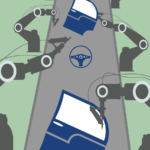
General Motors is a well known corporation and has been since its birth in 1908. However, in the 1980’s GM experienced a halt in their supply chain processes causing disaster for the corporation. Their innovative CEO at the time, Robert Smith, launched a robotics project costing billions of dollars. The robots were used on the manufacturing lines and constantly malfunctioned often breaking materials, painting themselves and ruining the entire plant’s production process. 

The robots slowed production creating a manufacturing nightmare for GM. With the amount of money that was spent on the robotics project, GM could have easily bought both the competing companies of Toyota and Nissan. 

Results of the Robot Mania Disaster

Production Failure: General Motors was unable to produce product quickly and efficiently because of the robotic machines malfunctioning. 

Logistics Failure: General Motor’s outbound logistics suffered. The halts in production to repair the robotics caused an inability to distribute their products. 

Sales Failure: Due to the drastic delays in the production and distribution of products, General Motors’s sales slowed. Customers didn’t want to wait longer for products or risk getting damaged products. 

The General Motors fed millions of dollars into ongoing robotics repairs, causing them to incur large losses. 

As a result, other competing companies were able to grow and take advantage of the gap in the vehicle manufacturing industry. General Motor’s competitor Toyota began to deliver low cost and high quality vehicles, establishing themselves more in the industry. 

Takeaways

While being innovative and looking for the next new tech is encouraged in any industry, it is imperative that you test your options! A lack of preparation will lead to disaster in your supply chain and management process. 

Research and test every decision before implementation. This will ensure the success of the final product! 


Want to learn more about Inventory Management Solutions? See How Clear Spider Can Help. Schedule a Demo today!

What Not To Do

Supply Chain Disaster Series: Boeing

October 3, 2019

No company wants to experience a supply chain disaster. Unfortunately, that is exactly what happened to the world’s largest aerospace company Boeing. Boeing is America’s largest manufacturer of jetliners, defense, space and security systems. 

The Company

William E. Boeing founded Boeing in 1916 and has been a leader in the aerospace manufacturing industry for over 100 years since. They have made it their mission to Connect, Protect, Explore and Inspire the World through Aerospace Innovation and are maintaining this directive by providing service to customers in more than 150 countries around the world. 

Currently, Boeing is redefining the air with their 787 Dreamliner airplane. The craft is 20 percent more fuel-efficient than Boeing’s previous model (the 767). It allows major savings from the material used in production to the general maintenance costs of the airplane. In other words, Boeing’s new design maximizes efficiency and costs across multiple platforms. 

Supply Chain Disaster

In the mid-2000s, Boeing’s new 787 Dreamliner created a buzz of excitement in the airline industry. The 787 was scheduled for release in May 2008. However, issues within their supply chain delayed production for three years before finally being released in 2011.

What Happened? 

With orders flying in, Boeing began fast production of their newest plane model. Within months, the process began to face setback after setback. Simple issues like running out of fasteners started to plague the company and improper actions were taken to maintain the fast production of 787 Dreamliners. 

Top Problems:

  1. Improper management of inventory: Boeing lacked tracking abilities and replenishment options for their inventory. Consequently, they faced  major delays to production.
  2. Changes to their systems: Boeing tried to introduce a new supply system while simultaneously changing their product assembly process. 
  3. Major delays: facing large manufacturing delays, Boeing pushed to quickly turn out Dreamliners, compromising the safety of the aircrafts. Investigations and lawsuits were raised. 

Lessons Learned

Boeing’s mismanagement is a prime example of a supply chain disaster. They took on too much too fast and failed. Certainly, it is important to recognize mismanagement and explore options to manage your inventory properly. Use effective planning during a project so that changing processes do not have a negative impact on each other. Finally, quality is a top priority when maintaining your company’s brand. Manage your operation with effective communication and assure no corners are cut. 

In summary, keep  your entire production process in mind- one single missing part will derail an entire project. At Clear Spider, we use our inventory management software to help your company achieve simple and efficient service for your customers. Ask us about how we can help you today!


Want to learn more about Inventory Management Solutions? See How Clear Spider Can Help. Schedule a Demo today!

What Not To Do

  • Page 1
  • Page 2
  • Page 3
  • Page 4
  • Go to Next Page »

Primary Sidebar

About Us

  • About Us
  • Awards and Achievements
  • Careers

Schedule a Demo

Ready to learn more about what Clear Spider can do for you?

Dashed curved arrow

Bring us your most
complex inventory
problems.

We’ll solve them for you.

Learn more about how Clear Spider can work for you. Fill in the form to receive a quote.

Warehouse Management System - Quote

  • This field is for validation purposes and should be left unchanged.

By completing this form, you agree to our Terms and Conditions and have read and acknowledged our Privacy Policy. Clear Spider may use this information to provide you with relevant content about our products and services, from which you can opt-out at any time.

Bring us your most
complex inventory
problems.

We’ll solve them for you.

Learn more about how Clear Spider can work for you. Fill in the form to activate our demo at no obligation.

Warehouse Management System

  • This field is for validation purposes and should be left unchanged.

By completing this form, you agree to our Terms and Conditions and have read and acknowledged our Privacy Policy. Clear Spider may use this information to provide you with relevant content about our products and services, from which you can opt-out at any time.

How effective is your inventory management?

VMI Assessment

"*" indicates required fields

Step 1 of 7

14%
This field is for validation purposes and should be left unchanged.
What are the factors contributing to increasing costs in your supply chain and inventory operations?*
What are the most common issues your customers experience?*
How accurate are you in tracking on-hand quantities of inventory you have in all your stocking locations?*
What are the challenges you face in getting inventory to where it needs to be at exactly the right time?*
Given your current inventory management system, which of the following features will have the greatest impact on meeting your inventory management goals?*
Is VMI right for you? Can you adopt VMI to increase sales for your business?
The results are in - what email address should we send your results to?
Got it! Just need a couple more details and your results are on their way!
Name*

Bring us your most
complex inventory
problems.

We’ll solve them for you.

Learn more about how Clear Spider can work for you. Fill in the form to activate our demo at no obligation.

Vendor Manged Inventory

  • This field is for validation purposes and should be left unchanged.

By completing this form, you agree to our Terms and Conditions and have read and acknowledged our Privacy Policy. Clear Spider may use this information to provide you with relevant content about our products and services, from which you can opt-out at any time.

Please fill out the form below to get your custom quote!

Bring us your most
complex inventory
problems.

We’ll solve them for you.

Learn more about how Clear Spider can work for you. Fill in the form to activate our demo at no obligation.

Start Demo - Hero

  • This field is for validation purposes and should be left unchanged.

By completing this form, you agree to our Terms and Conditions and have read and acknowledged our Privacy Policy. Clear Spider may use this information to provide you with relevant content about our products and services, from which you can opt-out at any time.

Fill out the form below to see Clear Spider’s Vaccine Management System live!

Fill out the form below to see SNAP2 in action!

Fill out the form below to see SNAP2 in action!

See SNAP2 Live!

  • This field is for validation purposes and should be left unchanged.

By completing this form, you agree to our Terms and Conditions and have read and acknowledged our Privacy Policy. Clear Spider may use this information to provide you with relevant content about our products and services, from which you can opt-out at any time.

Enter your email to watch our webinar on Technology vs COVID-19.

Enter your email to watch our webinar on How to Inoculate Your Supply Chain Against COVID-19.

Access your full ROI report!

The full report includes Estimated Monthly Savings ($) and Time to Break Even (Months).

  • This field is for validation purposes and should be left unchanged.

Please fill out the form below to get your custom quote!

Pricing

  • This field is for validation purposes and should be left unchanged.

By completing this form, you agree to our Terms and Conditions and have read and acknowledged our Privacy Policy. Clear Spider may use this information to provide you with relevant content about our products and services, from which you can opt-out at any time.

Bring us your most
complex inventory
problems.

We’ll solve them for you.

Learn more about how Clear Spider can work for you. Fill in the form to activate our demo at no obligation.

Start Demo

  • This field is for validation purposes and should be left unchanged.

By completing this form, you agree to our Terms and Conditions and have read and acknowledged our Privacy Policy. Clear Spider may use this information to provide you with relevant content about our products and services, from which you can opt-out at any time.